You've Ordered the Same Thing 47 Times: A Gentle Intervention for the Comfort-Zone Drinker
The Comfortable Lie We Tell Ourselves
There's a version of drink loyalty that's beautiful. You've tried dozens of things, explored the full spectrum, and arrived—through genuine trial and honest reflection—at your drink. Your thing. The one that fits like a well-worn jacket.
And then there's the other kind. The kind where you've been ordering a vodka soda since 2017 not because you love it but because you can't remember the last time you made a different choice. The kind where "I know what I like" is actually a sentence that means "I am afraid of being disappointed and mildly embarrassed in public."
These two things look identical from the outside. The difference is entirely internal, and it's worth interrogating.
This is your regret audit. Let's run the numbers.
Why We Default (It's Not Just Laziness)
Psychologists have a term for the cognitive shortcut we use when making repeated decisions: satisficing. It means choosing the option that's good enough rather than expending energy to find the best option. In high-stakes decisions, satisficing is actually pretty adaptive. In low-stakes ones—like what you're drinking at a birthday party—it just means you're leaving a lot of potential joy on the table.
But there's more going on than efficiency. Bars and restaurants are socially charged environments. Ordering is a performance. There's a bartender waiting, possibly a line behind you, definitely someone you're trying to impress in some way. The cognitive load of reading an unfamiliar menu while managing your social presentation is genuinely high. Your brain reaches for the cached answer—vodka soda, please—and the decision is over before it started.
The result? You drink the same thing for six years and wonder why you never feel excited about it.
The other culprit is a bad memory. You tried something adventurous once, it didn't land, and your brain filed "trying new drinks" under "things that go wrong" without giving you a chance to appeal the ruling. One bad mezcal experience at age 22 shouldn't disqualify the entire category. But here you are, still holding the grudge.
The Regret Audit: Three Questions to Ask Yourself Right Now
Before we get to the exercises, do a quick inventory:
1. When did you start ordering your go-to drink? If the answer is "in college" or "after a breakup" or "when I was going through a phase," that's useful information. Your circumstances changed. Your drink didn't.
2. Have you ordered it in the last month and genuinely thought, "yes, this is exactly what I wanted"? Not "this is fine." Not "this is familiar." This is exactly right. If you can't remember the last time your drink made you feel something, it might be operating on autopilot.
3. What's the last new thing you tried, and how long ago was it? If you have to think hard, that's your answer.
Exercises for the Comfort-Zone Drinker
The Blind Point
Next time you're at a bar with a thoughtful bartender—the kind who seems genuinely interested in their craft—try this: tell them three things you enjoy. Not drinks. Experiences. "I love the first bite of a really good peach." "I'm into things that feel like fall." "I want something that tastes like it has a secret." Then let them build you something.
You are not allowed to ask what's in it until after you've tasted it and formed an opinion. This removes the cognitive load of the menu and the performance anxiety of choosing, and replaces it with pure sensory experience. You might hate it. You might have a small, private revelation. Either way, you now know something about yourself you didn't know before.
The Spirits Sommelier Method
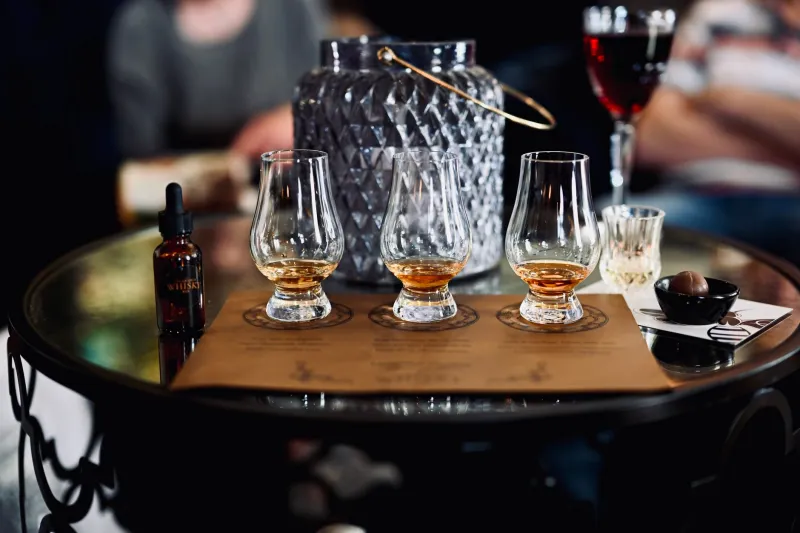
Borrow this from the world of wine and cheese: when you try something new, give it a formal rating. Not a number—a description. Force yourself to use at least three specific words: one for the aroma, one for the first impression, one for the finish. Write it in your phone's notes app. This sounds ridiculous. Do it anyway.
The act of describing an experience makes you pay attention to it. It converts passive consumption into active discovery. Over time, you'll start to notice patterns in what you actually enjoy—patterns that might surprise you. You might discover you love anything with a bitter finish. Or that you're consistently drawn to citrus-forward profiles. Or that you hate anything barrel-aged, which explains why you've been quietly miserable every time someone orders a round of whiskey.
The One-Step Rule
You don't have to leap from vodka soda to a four-ingredient cocktail with house-made bitters. Take one step. If you love vodka soda, try a vodka soda with a flavored shrub added. If you love IPAs, try a sour beer. If you always get the house red, ask the server what they'd drink instead.
One step creates new data. New data updates the map. The map gets more interesting.
The Category Experiment
Pick one spirit category you've written off and give it a fair trial—three different expressions, three different contexts. You hate tequila? Try a blanco, a reposado, and a well-made margarita from a place that actually cares. You've dismissed gin? Try a London dry, then a contemporary American gin, then a floral one. You're not committing to anything. You're just collecting information.
A lot of spirit aversions are actually brand aversions, or bad-experience aversions, or "I was 19 and made terrible choices" aversions. Give the category a chance to make its case.
What Real Loyalty Looks Like
Here's the thing about this whole project: the goal isn't to abandon your comfort drink. The goal is to earn it. To know, with genuine confidence, that you've looked around, you've tried the things, you've been curious and open and willing to be surprised—and at the end of all that, you still want the vodka soda. That's not a consolation prize. That's a love story.
But if you've never done the work, you don't actually know. You're not loyal. You're just comfortable. And comfortable is fine for a couch, but it's a low bar for your relationship with pleasure.
Try the thing. Rate it badly if it deserves it. Try the next thing. Somewhere in the process, you're going to find a drink that makes you feel like you've been looking for it your whole life without knowing it.
That's the jug worth filling.