Just You, Just Ice: What Your Solo Pour Is Really Telling You
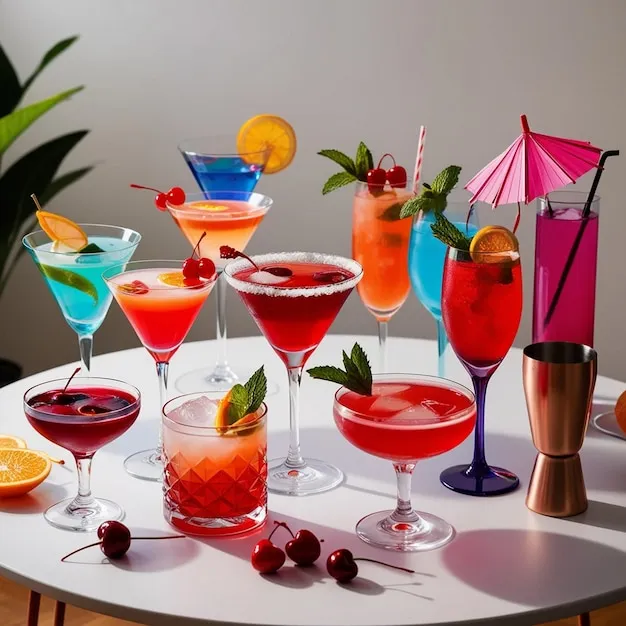
It starts innocently enough. You get home, the apartment is quiet in that specific way that feels like it has opinions, and you drift toward the kitchen. Maybe you crack open a beer. Maybe you pour two fingers of whiskey into the good glass — the one you only use when you want to feel like a person who has their life together. Maybe you shake something elaborate with a tiny cocktail strainer you bought during a pandemic spiral and never thought you'd actually use.
No one is watching. No one is toasting with you. It's just you and the drink and whatever you're choosing not to think about.
Solo drinking is one of the most common and least discussed rituals in young adult American life. And yet, somewhere between the Instagram-worthy home bar setups and the quiet 11 PM pours that nobody posts about, there's a story worth telling — honestly, without the judgment and without the romanticizing.
The Ritual Isn't the Problem (Usually)
Let's get something out of the way: drinking alone is not automatically a crisis. Cultures across the world have built entire philosophies around solitary sipping. The Japanese concept of hitorigoto — doing things alone, for oneself — treats solo meals and drinks as an act of self-respect rather than social failure. A glass of wine with a book on a Tuesday isn't a cry for help. It's Tuesday.
Psychologists actually distinguish between two very different kinds of solitary drinking. The first is what researchers sometimes call enhancement drinking — you feel good, and the drink is a small ceremony that extends that feeling. A reward. A ritual. A way of marking the end of something and the beginning of rest. This kind of drinking tends to be intentional, moderate, and tied to positive emotional states.
The second type is coping drinking — and this is where the ice gets a little thin. Coping drinking happens when the drink is doing emotional labor that should probably be done by a therapist, a phone call, a walk, or a really good cry. It's not about the taste of what's in the glass. It's about what the glass is muffling.
The tricky part? From the outside — and even from the inside — these two things can look identical.
What Your Go-To Solo Drink Might Be Saying
We're not going to pretend there's a clinical diagnosis hiding in your cocktail preferences. But pay attention to the patterns, because patterns are where the truth lives.
The Elaborate Craft Cocktail — You're muddling fresh mint at 9:30 PM on a Wednesday. You have a jigger. You're watching a YouTube tutorial about clarified milk punch. Here's the thing: this is almost always a healthy sign. The process is the point. You're engaged, present, learning something, and treating yourself like a guest worth impressing. This is the solo pour equivalent of cooking a real meal instead of eating cereal over the sink.
The Same Drink, Every Night, Poured Without Thinking — Autopilot drinking is worth a second look. Not because it's automatically harmful, but because anything done on autopilot deserves occasional examination. Ask yourself: if you skipped it tonight, would you feel anxious? Irritable? Genuinely uncomfortable in your own skin? That discomfort is information.
The Drink You Pour When Something Bad Happened — This one's the most human of all, and also the one that deserves the most honesty. Stress drinking as an occasional response to a genuinely terrible day is something most adults do. It becomes a concern when the terrible day becomes the only reason you drink — when you stop noticing good days because you're not pouring for those anymore.
The Social Loneliness Underneath the Glass
Here's what the research actually shows, and it's worth sitting with: studies from institutions like the University of Pittsburgh have found that young adults who drink alone are significantly more likely to report higher levels of loneliness and depression than those who drink socially — even when controlling for how much they drink. The drink isn't causing the loneliness. The loneliness is already there. The drink just shows up to keep it company.
This is particularly relevant for Gen Z and younger millennials, who came of age during a period of intense social fragmentation — smartphones, remote everything, the slow collapse of third spaces like bars and coffee shops where people used to just exist near each other without an agenda. When you lose the casual infrastructure of social life, you don't stop wanting connection. You just stop having places to find it. And the kitchen is always right there.
That's not a character flaw. That's a structural problem that a lot of us are privately navigating with a drink in our hand.
How to Check In With Yourself (Without Spiraling)
You don't need to turn every solo nightcap into a therapy session. But a few honest questions, asked occasionally and without self-punishment, can be genuinely useful:
- Would I be comfortable telling someone I trust about this habit? Not because you need permission, but because shame is often a signal worth investigating.
- Am I drinking to feel something, or to stop feeling something? Both happen. One happens more often than the other, it's worth knowing which.
- Has anything changed recently? Increases in solo drinking often track with life transitions — breakups, job stress, moving to a new city, losing a friendship. The drink didn't cause the change. But it might be marking it.
- Do I have other ways of winding down that I actually use? If the drink is the only tool in the toolkit, that's less about the drinking and more about the toolkit.
The Jug You're Filling Might Not Be the One in Your Hand
At Your Love Is My Jug, we believe pretty firmly that your relationship with what you drink is always, on some level, a relationship with yourself. The solo pour is one of the most intimate versions of that relationship — no audience, no performance, just you and a glass and the honest weight of the day.
Most nights, that's a perfectly fine place to be. Pour something you actually like. Sit with it. Let yourself rest.
But on the nights when the glass feels less like a reward and more like a lifeline — notice that. You don't have to fix it immediately. You don't have to confess it to anyone. Just notice it, the way you'd notice a warning light on the dashboard. You're allowed to keep driving. But maybe make an appointment.
The SAMHSA National Helpline (1-800-662-4357) is free, confidential, and available 24/7 if you ever want to talk to someone who isn't a jug.